

ERTMS 2026 Conference: Compagnie des Signaux committed to accelerating the deployment of European rail systems
ERTMS 2026 Conference: Compagnie des Signaux committed to accelerating the deployment of European rail systems
Accelerating the deployment of ERTMS across Europe while mastering technical and regulatory complexity is now a strategic challenge for the European rail sector.
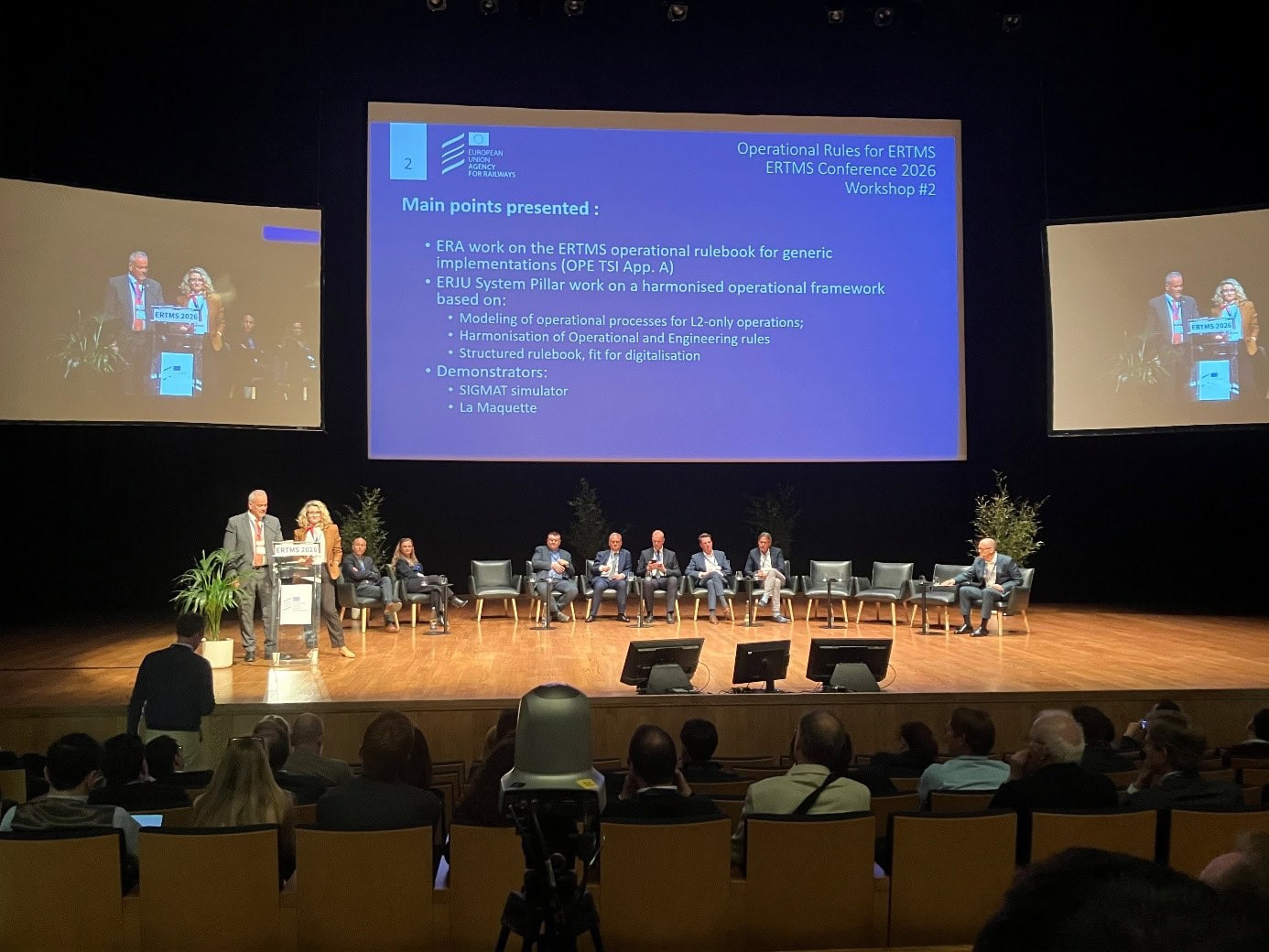
This key issue shaped the discussions at the ERTMS 2026 Conference, held in Valenciennes from 20 to 23 April 2026 and organised by the European Union Agency for Railways (ERA).
As a long‑standing contributor to the development of high‑performance, interoperable signalling systems, Compagnie des Signaux took part in the conference alongside the main European rail stakeholders, reaffirming its strong commitment to accelerating ETCS deployments and preparing for the transition to FRMCS.
«This conference brings together the latest on how Europe’s rail CCS is evolving. It looks at how to make certification/authorisation for large ERTMS and FRMCS retrofit programmes faster and easier, how to speed up deployment through modular data/standards and digital conformity assessment, and how to improve day-to-day performance using System Pillar lifecycle concepts».
Frédéric Bernaudin, Head of Bid at Compagnie des Signaux (CSEE), participant at ERTMS 2026 Conference.
Accelerating ETCS and FRMCS deployments: a shared commitment
The discussions highlighted a widely shared assessment: rail modernisation programmes are still constrained by complex and time‑consuming authorisation processes, further impacted by the diversity of rolling stock and the repetition of conformity assessments.
Several practical levers were explored, including vehicle family authorisations, the standardisation of retrofit approaches through the Standard Retrofit Package concept, and adjustments to regulatory frameworks to enable targeted and proportionate upgrades.
These areas are essential to support large‑scale deployment efforts, an objective to which Compagnie des Signaux is fully committed.
Digitalising assessments to improve efficiency
The conference also confirmed the key role of digitalising conformity assessment processes in reducing deployment timelines and improving reliability.
The use of structured data enables automated pre‑checks, while raising important challenges related to trust, digital signatures and the harmonisation of practices at European level.
This work is part of a shared ambition: delivering more efficient systems based on common standards and strengthened collaboration across the sector.
Interoperability and human factors: putting users at the heart of systems
Cross‑border interoperability remains a major challenge, particularly due to national rules and operational constraints specific to border sections.
Beyond technical considerations, exchanges also emphasised the importance of human factors: simulator‑based training, ETCS interface ergonomics and the management of degraded situations are all critical to ensuring safe, efficient and user‑accepted systems.
Preparing for the transition to FRMCS
Finally, the transition to FRMCS was identified as a major transformation that must be carefully anticipated.
Between temporary coexistence of technologies, increased cybersecurity requirements and new dependencies on telecom networks, this transition require coordinated preparation and a long‑term systemic approach.
Actively shaping the future of European rail
ERTMS 2026 confirms that the future of European rail relies on a demanding balance between standardisation, digitalisation and close coordination between stakeholders.
True to its values of commitment, expertise and responsibility, Compagnie des Signaux a global leader in high‑speed rail signalling is actively contributing to this collective momentum, supporting the development of interoperable, high‑performance and sustainable European rail systems.